

The parts we keep having to explain
Four notes from the week after the storm. Each one is filed against the stage of the queue it belongs to, and none of them is about shingles.
Written when somebody asked the same question twice
Nothing here is a product page in a different font. Each note covers one place in the sequence where people reliably get stuck — the first hour, the tarp, the wait, the estimate — and says plainly what we can and cannot do about it.
-
 Stage 05 The scope
How to read a two-column estimate
An estimate with one column is a number. An estimate with two is an argument you can follow — and a decision that stays yours.
Read the note
This one sits at The scope — Day 9–14 · numbers on paper.
-
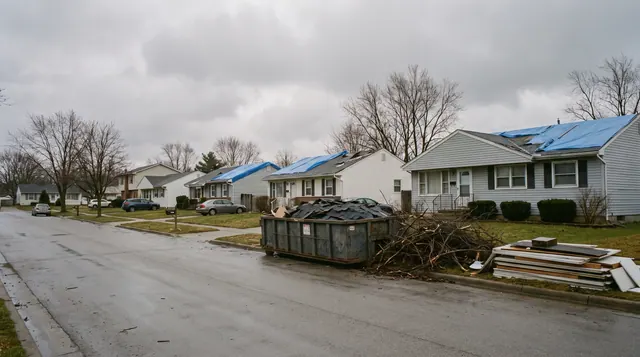 Stage 04 The claim
Six days on the adjuster's calendar
Nothing visible happens between day three and day nine. That is not neglect, and it is not a secret. Here is the actual mechanism.
Read the note
This one sits at The claim — Day 3–9 · then you wait.
-
 Stage 02 The tarp
What a tarp does, and what it does not do
It is a sheet of woven polyethylene held down by battens and gravity. Understanding exactly that much of it is worth a lot at two in the morning.
Read the note
This one sits at The tarp — Day 0–1 · before the next band.
-
 Stage 02 The tarp
The first hour: photograph it before anybody covers it
You are standing in wet grass at half past six with a phone in your hand. This is the list. It takes about fifteen minutes and it is the most useful quarter of an hour of the month.
Read the note
This one sits at The tarp — Day 0–1 · before the next band.
The queue is still the index
A note that belongs to no stage does not belong on this site. If you would rather start from the process than from the writing, the stage pages are here.
About the notes
Who writes these?
The people who run the jobs. Each note is filed against the stage of the queue it belongs to, and it is written to be useful to somebody who has not hired us and may never hire us.
Is any of this advice about my claim?
No. These notes describe how the process is shaped and what we do inside it. They never predict a decision, a payout, an approval or a deductible on your policy, because nobody outside your carrier can.
Why are there so few of them?
Because we only write one when there is something we keep having to explain on the phone. A note per week would mean four notes a month that nobody needed.
Start at stage one.
Describe what you can see from the ground. We will tell you whether this is a tarp-tonight problem or a Tuesday problem — and we will say so either way.