
Mon-Fri 9am-5pm Knoxville & the Gulf South Storm line: (865) 555-0172
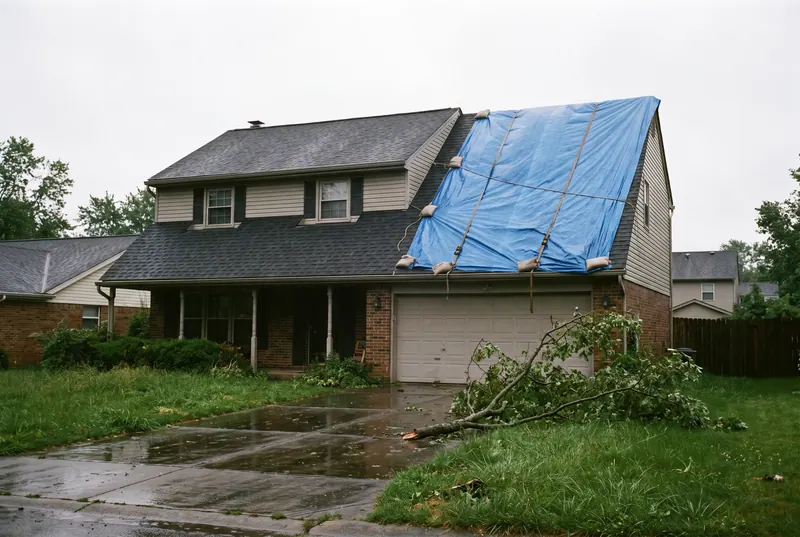
A two-storey house with a blue tarp strapped across one whole roof slope and weighted with sandbags, a fallen tree limb across the wet driveway under an overcast sky
Stage 02 The tarp

Hurricane damage response

A named storm is not a bigger version of an ordinary one. It is the same work with every roof in the region wanting it in the same week — which changes the calendar, not the job. This page is about what that actually means for your house.

Straight about this job

What changes when the storm has a name

Triage stops being a formality

In an ordinary week everyone who calls gets a slot. After landfall, open roofs with water coming in go first and everything else is scheduled behind them. We tell you which group you are in when you ring, rather than implying everybody is first.

The queue is regional, not personal

Adjusters, crews, dumpsters, colour-matched material and a dry morning are all being asked for by several thousand houses at once. Nothing about your file is being ignored; it is behind other files that opened on the same night.

Dates you can actually plan around

We give you the date we are holding, not the date that sounds better on the phone. If it moves, somebody rings to say so rather than simply not turning up.

The before-photograph matters more

After a named event, everything on a street looks similar and every roof has a tarp on it. A dated, located photograph of your opening, taken before it was covered, is what separates your roof from the general picture.

We are here in February too

The trucks that appear the week after a hurricane and leave before winter are a known feature of this coast. Ask any contractor who turns up where their office is and how you reach them in six months — including us.

No claim outcome is ever implied

Not a decision, not an approval, not a payout, not a settlement, not a deductible. Named-storm policies vary enormously and only your carrier can read yours to you. We will not guess at it, and you should be suspicious of anybody who does.

In order

After landfall, in order

  1. Wait until it is safe, then look from the ground

    Standing water, live lines and loose debris outrank a roof. When it is safe to walk outside, photograph the house from all four sides and photograph every ceiling inside.

  2. Ring the storm line and describe it

    What you can see, whether water is coming in, and whether the house is habitable. That is enough for us to place you in the right group and give you a real window.

  3. Cover the openings

    Photographed first, then tarped: from the ridge, past the damage, over the eave, battened or bagged along the perimeter and strapped over the top. Nobody goes on a roof while the wind is still up.

  4. Document the whole property

    Roof, siding, fascia, soffit, windows, fence, outbuildings and anything of yours that got wet. A named-storm file that only contains roof photographs is a file with holes in it.

  5. Then the slow part

    Assignment, an adjuster's route, a scope, materials and a dry morning. Days three to nine are typically an adjuster's calendar; the wait after that is usually material and weather. We show both on the home page at their real length.

  6. Build, and close out properly

    Tear-off, deck inspection with soft sheets photographed and priced before they are replaced, dry-in, install, magnet run. Then final photographs, the completion certificate your carrier asks for, and the written terms of what we stand behind.

Start it — (865) 555-0172

Straight answers

After a named storm — straight answers

How soon after landfall can anyone come out?

As soon as the roads and the wind allow, and in the order that active water dictates. We will give you a window when you ring and we will ring you if it moves. What we will not do is promise a time we already know we cannot hold.

Everyone on my street has a tarp. Does that make my claim harder?

It makes documentation matter more, which is why we photograph the opening before covering it and why the file carries dates and locations. Beyond that, what happens with your claim is between you and your carrier — we do not predict it.

Someone knocked on my door offering to handle everything. Should I sign?

Read every line first, and never sign anything that assigns your claim benefits to a contractor at the door. A company that needs your signature this evening is telling you something about how long it plans to be here.

Why does material take so long after a hurricane?

Because a whole region orders the same thing in the same fortnight, and colour matches run out first. We tell you which material is holding the date rather than letting the delay be a mystery.

Can the roof be rebuilt to a higher standard than it was?

Often, yes — heavier fastening patterns, a sealed deck, different underlayment. Those are choices with prices attached, and we put them on the estimate as separate lines so you can see exactly what you are choosing and what it costs.

Do you work outside Louisiana?

Yes, along the Mississippi Gulf Coast as well. It is the same sequence with different state rules at the claim stage, which is why those two stages have separate pages on this site.

How long will the tarp hold?

Weeks rather than months in TN sun. If your build date slips past that, we come back and refit it. Say something as soon as you see the sheet slackening or the edges lifting.

Day 0 stage one

Get into the queue

Ring it through and we will triage it on the phone — (865) 555-0172. If typing is easier, this reaches the same desk.

  • The inspection and the photo report cost nothing.
  • You keep the photographs whether or not you hire us.
  • No claim outcome, payout or deductible is ever implied.

Tell us what you can see

Please enter your first name.

Please enter a phone number we can reach you on.

That email address doesn't look right.

No obligation, and no claim outcome is implied by anything on this form. Faster: (865) 555-0172.

Got it. Someone will call you back — usually the same day.

Start at stage one.

Describe what you can see from the ground. We will tell you whether this is a tarp-tonight problem or a Tuesday problem — and we will say so either way.

Call the storm line Inspection