
Mon-Fri 9am-5pm Knoxville & the Gulf South Storm line: (865) 555-0172
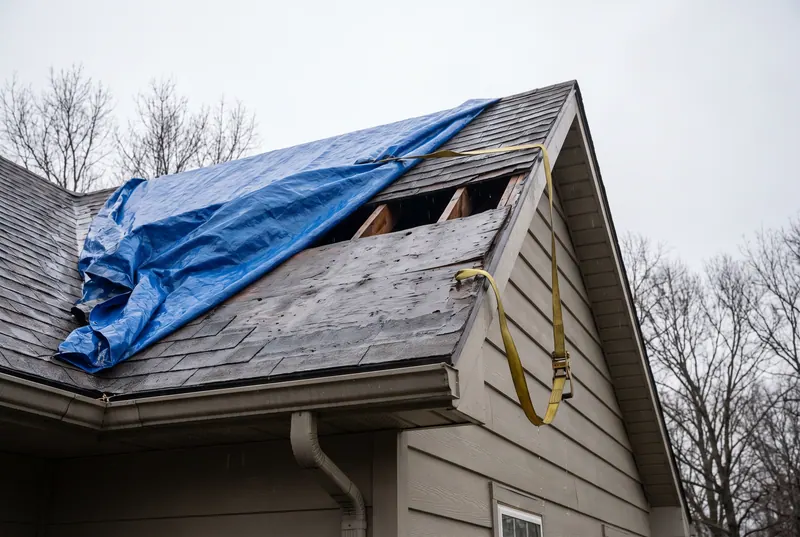
A gable roof with a blue tarp pulled back off one section, exposing bare grey deck boards and an open gap into the rafters, a yellow ratchet strap running down the gable end
Stage 05 The scope

How to choose a professional roofer

This page is written to be used against us as much as against anybody else. Hiring a roofer is a decision made with documents in front of you — a licence number, an itemised scope, two warranties and a straight answer about decking — and the companies that dislike being asked for those are telling you something.

The checklist

Eight things to insist on before anybody starts work

None of these require you to know anything about roofing. They are all about documents, addresses and process, which is exactly the point: you can verify all eight without ever getting on a ladder.

Paperwork, by number, in your hand

Ask for the contractor's licence number and current certificates of general liability and workers' compensation — the documents, not a sentence on a website. Then verify the licence with the state board yourself. It takes two minutes and a phone.
A physical address you could drive to

Not a PO box, not a phone number with a different area code, not "we're local to the whole Gulf South". A warranty is only as durable as the company that wrote it, and a company you cannot find is a company you cannot hold to anything.

Treat the post-storm door knock carefully

Some of the people canvassing a damaged street are legitimate and some will be gone by winter. The tell is urgency: a contract that has to be signed this evening, and a price that only appears after a carrier says a number.

Never assign your claim benefits at the door

An assignment of benefits hands your claim to a contractor. There are situations where that is a reasonable thing to do; a kitchen table three days after a hurricane, under time pressure, is not one of them.

An itemised scope, not a single number

Materials, labour, decking allowance, underlayment, haul-off, permits and dumpster — line by line, with quantities. A lump sum hides everything you would want to compare between two companies.

Both warranties, in writing, before you sign

Materials are covered by whoever made them; installation is covered by whoever installed it. Ask for both documents and read what voids them. A warranty described verbally, or advertised as a number on a banner, is not a document.

Ask who is actually coming

Employed crew or subcontracted? Who supervises on site, and are they there all day? Who do you ring at four in the afternoon when something is wrong? You are trusting these people on your house; it is a fair question and it should get a straight answer.

Ask what happens under the shingles

Specifically: what happens if the decking is soft. Is there an allowance, at what rate per sheet, and will you see a photograph of every sheet before it is replaced and priced? This is where surprise costs live.

Stop when you hear one of these

Eight sentences that should end the conversation

Not warning signs to weigh up against the rest. Each one on its own is enough to thank somebody for their time and close the door.

  • A price that changes as soon as they hear there is an insurance claim.
  • An offer to cover, absorb, waive or "work around" your deductible.
  • A discount that only exists if you sign today.
  • A large payment demanded before any material arrives on site.
  • A refusal to put the scope in writing before work starts.
  • A promise about what your carrier will approve or pay.
  • A licence number they will "send over later" and never do.
  • Photographs of damage that they will not let you keep a copy of.

The uncomfortable part is that most of these are said pleasantly, by somebody who has been polite for twenty minutes and has just looked at your damaged house. Being polite is not evidence of anything. The paperwork is.

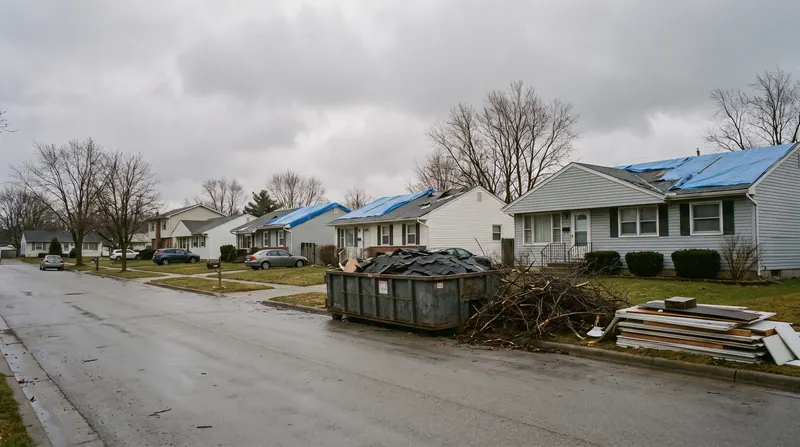
A suburban street after a storm: blue tarps on several roofs, a skip at the kerb, a pile of cut brush and stacked debris under a grey sky
The week a street is canvassed is the week to slow down, not speed up.
Print this bit

Eight questions, asked of everybody the same

Ask all eight of every company you speak to, in the same order, and write the answers down. The differences between three sets of answers will tell you more than three websites will.

  1. Can I have your licence number and your certificates of insurance today?

  2. Is this scope itemised with quantities, and can I keep a copy?

  3. What is your decking allowance, and how is extra decking priced?

  4. Which lines here are code requirements in this parish, and which are your recommendation?

  5. Who supervises the crew on site, and how do I reach them during the day?

  6. What exactly does your workmanship warranty cover, and what voids it?

  7. What happens to this price if the carrier's approved scope changes mid-job?

  8. What do I get at close-out, and when do I get it?

After you have chosen

What a good week six looks like

Choosing well shows up later, in small and unglamorous ways. Somebody rings the night before to confirm the crew is coming. The crew arrives at the hour they said. When four sheets of decking turn out to be soft, you are shown photographs of them and told the price before anything is replaced, rather than finding a line on an invoice three weeks afterwards.

At the end, somebody runs a magnet over the grass, and somebody hands you a set of final photographs, a completion certificate, an invoice that matches the scope you agreed, and a written statement of what the company stands behind and what voids it. If the weather moves the date, you get a phone call rather than an empty driveway.

None of that is remarkable. It is just what happens when the paperwork was right at the start — which is why the questions above are worth the twenty awkward minutes they take.

Straight answers

Choosing a roofer — straight answers

How many quotes should I get?

Two or three, and compare the scopes rather than the totals. The cheapest bid is usually cheap somewhere you cannot see: a thinner decking allowance, a lower-grade underlayment, or a crew being paid less than the others pay theirs.

Is a deposit normal?

A modest scheduling deposit is ordinary. A large payment before material arrives is not, and anyone who wants an insurance cheque endorsed over to them before work starts is asking for something you should decline.

What if a contractor offers to cover my deductible?

Decline, and be sceptical about everything else that firm has told you. It is a proposal to misrepresent the cost of work to an insurer and it puts the homeowner in the middle of it, not just the contractor.

Does this checklist apply to you as well?

It applies to every company you speak to, and it should be applied without exception. It is worth noticing that Granite Ridge Roofing is a fictional business built for a design demonstration — it cannot hand you a licence number or a certificate of insurance, which is precisely why this site never claims to hold either. Hold real contractors to a standard a demo cannot meet.

How do I check a licence?

Every state runs a board or registry that lists contractor licences and their status, and the search is public and free. Look up the number they gave you, check the name on it matches the company on your contract, and check it is current.

Should I choose the company with the best reviews?

Reviews are one input and they are the easiest one to manufacture. Written paperwork, a verifiable licence, an itemised scope and a straight answer on the phone are all harder to fake than a five-line testimonial, and they tell you more.

What is the single best question?

"What happens if the decking underneath is soft?" A good contractor answers it with a rate, a process and a photograph. A bad one answers it with reassurance, and then with an invoice.

Ask us the eight questions.

Then ask the next two companies the same eight. If our answers are not the clearest of the three, hire one of them — that is what the list is for.

Call the storm line Inspection