
Mon-Fri 9am-5pm Knoxville & the Gulf South Storm line: (865) 555-0172
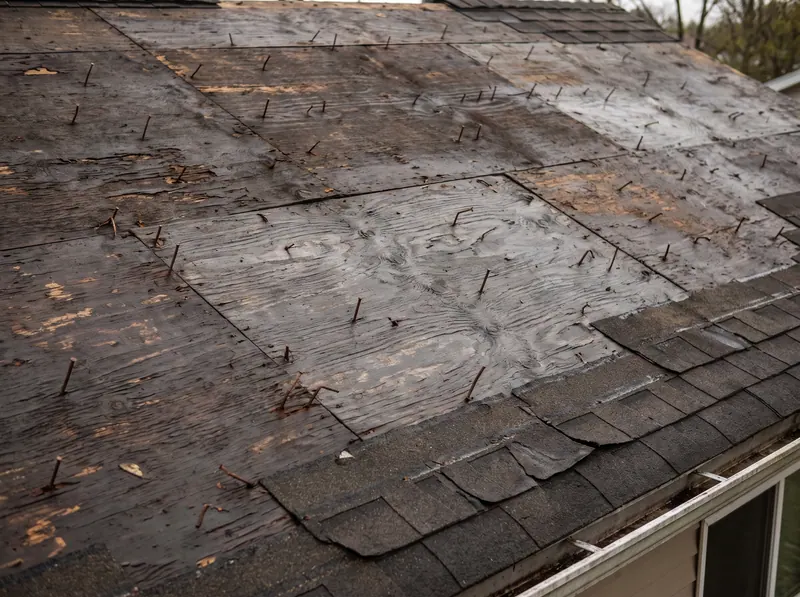
Storm-stripped roof decking: wet grey plywood covered in bent protruding nails, with a torn row of asphalt shingles left at the eave
Stage 07 The close-out

Warranties, explained

The last document of the job is the one people forget to ask for and the one they will need most. This page is not a sales pitch for a warranty — it is a plain explanation of how the two kinds work, what quietly voids them, and what to insist on seeing in writing.

Read this first

This page publishes no warranty term

There is no number of years anywhere on this site, and that is deliberate. Granite Ridge Roofing is a fictional business invented for a design demonstration. A term nobody can enforce is not a warranty; it is typography. So instead of printing one, this page explains what a real one contains — which is the part that would have been useful anyway.

When this template is used by a real contractor, their actual warranty document belongs here in full: the term, the exclusions, the transfer clause and the claims process, exactly as written in the contract a customer signs. A page that says less than the contract does is a page that is misleading somebody.

The basic split

A roof normally has two warranties, from two different companies

People talk about "the warranty" as though it were one thing. It is almost always two, they cover different failures, and the one most likely to be needed is the one that gets the least attention.

Material cover, from the manufacturer

Issued by whoever made the shingles, the membrane or the metal. It covers manufacturing defects in the product itself — delamination, granule loss outside the expected range, a batch that failed. It is a product guarantee, and it is written by the product's lawyers.

What to check

  • Whether labour and disposal are included, or only the material value
  • Whether cover is prorated, and when the non-prorated portion ends
  • Whether it must be registered after installation, and by whom
  • Whether enhanced versions are only offered through the maker’s own installer programme

Workmanship cover, from the contractor

Issued by whoever fitted it. It covers installation: nailing, flashing, valleys, penetrations, ventilation, the details where water actually gets in. Most roof failures are installation failures, which makes this the document that matters most and the one least often read.

What to check

  • What counts as a workmanship defect, in the contractor’s own words
  • How a claim is reported, and how fast they undertake to respond
  • Whether it survives a sale of the house, and on what terms
  • Whether the company issuing it will plausibly still exist in ten years

The gap between them is where people get caught. A manufacturer will not pay for a leak caused by bad flashing, and a contractor will not pay for a defective batch of shingles. If a roof fails and the two point at each other, the only thing that resolves it is what the two documents actually say.

Quietly, and usually by accident

Six ordinary things that can void a roof warranty

None of these require bad intentions. Most of them are somebody doing a normal job on a normal Tuesday without knowing there was a document involved.

Somebody else drills through it

A satellite mount, a solar bracket, a new bathroom fan or an air-conditioning line run through the deck by a trade who is not a roofer. It is the most common void we see, and the homeowner almost never knew it counted.

The roof gets washed

Pressure washing strips granules off asphalt shingles. So does a stiff brush and, in some cases, the wrong chemical treatment for moss. Manufacturers publish cleaning instructions specifically so they can point at them later.

A second layer goes over the first

Roofing over an existing roof is permitted in some places and voids some warranties everywhere. It also hides the deck, which is the thing an inspection most needs to see.

Ventilation is wrong or gets blocked

Attic ventilation is an installation requirement in most manufacturers' instructions, not a nice-to-have. Insulation stuffed into soffit vents after the fact quietly breaches it.

Damage is never reported

Most documents require notice within a stated period of the damage occurring, not of you noticing it. A leak you lived with for two seasons is a harder conversation than one reported the week it started.

Maintenance in the document never happens

Some warranties carry an inspection or maintenance requirement. If yours does, the record of having done it is part of the cover, and nobody will remind you.

Before you sign

Six things to ask for, in writing

Every one of these is a reasonable request, and how a contractor reacts to being asked tells you almost as much as the answers do.

  • The full warranty document, before you sign, not a summary paragraph in a brochure.
  • Whether the manufacturer cover is registered for your roof, by whom, and by when.
  • Whether labour and disposal are included, or whether only material value is covered.
  • What the exclusions list actually says, read out loud, in the room.
  • How a claim is made: who you telephone, what you send, how long they take to reply.
  • Whether it transfers on sale, how many times, within what window, and at what cost.

On transfer clauses

A transferable warranty is genuinely worth something when you sell, but it is conditional and it expires. The usual shape is: one transfer only, within a window measured from the installation date rather than from the sale, a form to submit, and sometimes a fee. Miss the window and the cover simply ends with you.

The practical advice is dull and effective: put the warranty document, the registration confirmation and the completion certificate in the same folder as the deed, on the day the job finishes.

On the length of a warranty

The number of years is the cheapest thing on any warranty to print, and it is worth exactly as much as the company standing behind it. A long term from a business that will not answer the phone in five years is worth less than a modest one from a business that will.

Straight answers

Warranty questions, answered plainly

What is the difference between a material warranty and a workmanship warranty?

They come from two different companies and cover two different failures. The manufacturer warrants that the product left the factory as specified. The contractor warrants that it was fitted correctly. A shingle that blows off because it was nailed too high is an installation failure, and the manufacturer's document has nothing to say about it.

If a shingle fails, who pays for the labour to replace it?

That is the question most people never think to ask. A basic material warranty often covers the value of the material only — not the tear-off, not the labour, not the disposal. Since labour is usually the larger half of a roof, a document that excludes it covers less than it appears to.

What does "prorated" mean on a warranty?

It means the cover shrinks as the roof ages. A prorated document pays a declining share of the material value over the life of the warranty, so the headline period and the period of meaningful cover are not the same thing. Look for how long the non-prorated portion runs, because that is the part with real money in it.

Can a warranty be transferred when I sell the house?

Often, but rarely automatically. Transfer clauses typically allow one transfer, inside a window measured from installation, sometimes with a fee and a form. If nobody registers the roof in the first place, there may be nothing to transfer at all.

What voids a roof warranty?

Common causes are other trades fixing equipment through the roof, pressure washing shingles, adding vents or satellite mounts without following the manufacturer's instructions, layering a new roof over an old one, and storm damage that is never reported. Neglecting a stated maintenance requirement is another, and it is the one most people never read.

Why does this site not publish a warranty term?

Because Granite Ridge Roofing is a fictional business built for a design demonstration. A term that nobody can enforce is not a warranty — it is a number on a banner. A real contractor's warranty belongs in your contract, in full, with a company behind it that can still be telephoned in ten years.

Is a long warranty a sign of a good roofer?

Not on its own. The length is the easiest part of a warranty to print and the hardest part to verify. What tells you more is whether the document is specific about exclusions, whether it names a claims process, and whether the company has any track record you can actually check.

Ask us the awkward version of any of these.

A contractor who cannot explain their own warranty document in plain language on the telephone is telling you something useful about it.

Call the storm line Inspection