

Mon-Fri 9am-5pm Knoxville & the Gulf South Storm line: (865) 555-0172
A claim folder open on a kitchen table beside a tape measure, a notepad of dates and a phone showing roof photographs
Stage 05 The scope

Paying for it

Stage five is where the number arrives, and the second question is always how. This page describes the routes people actually use and what each one really costs you — not in rates, which we cannot honestly quote, but in trade-offs, which we can.

Before any of this

You cannot finance a number nobody has written down

Every route below starts from the same place: an itemised scope produced after somebody walked the roof. Arranging money against an estimate that was never measured is how people end up borrowing for a job that then changes size.

  • Inspection and photo report first. Both cost nothing.
  • Then the scope, itemised, with a decking allowance stated on it.
  • Then, and only then, the conversation about how it gets paid for.

How a scope is put together

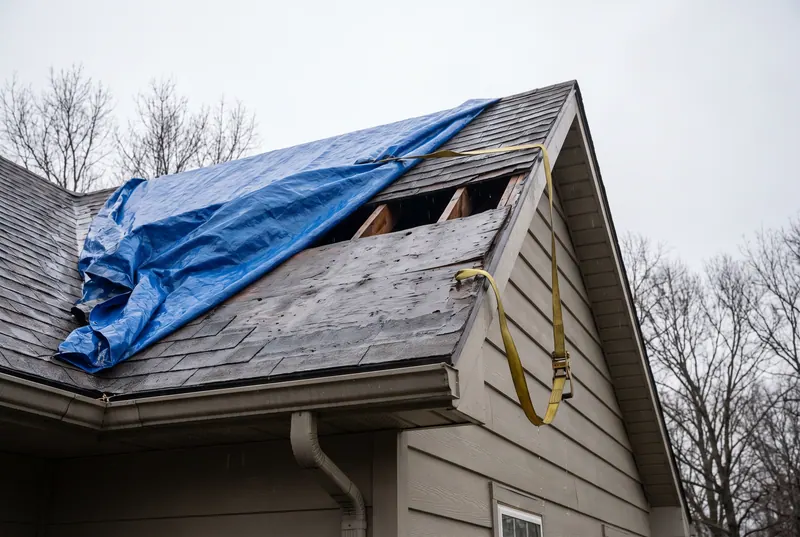
A blue tarp strapped back from a storm-damaged gable, exposing bare grey decking and two open gaps where the sheathing is missing
The size of the job is decided up here, not at the kitchen table.
Six routes

Every way people pay for a roof, and what each one costs

No rate, term, offer or approval appears anywhere on this page, because none of those can come from a roofing company. What follows is the shape of each route and the question worth asking before you take it.

Money you already have

What it is good for
Nothing to arrange, nothing to repay, and no third party with an interest in how big the job gets.
What it really costs
It empties the fund you would otherwise use for the next thing that breaks — and after a storm, something usually does.
What to ask
Whether paying outright changes the price at all, and if so by how much, written on the scope rather than promised on the phone.

Insurance claim proceeds

What it is good for
Where a storm claim is open, the funding route is already defined by your policy rather than by anything a contractor arranges.
What it really costs
It runs on the carrier's calendar, arrives in stages rather than all at once, and the deductible is yours regardless. Anything the claim does not cover is a separate decision you are making with your own money.
What to ask
Which lines on the scope sit inside the claim and which sit outside it — and get that split in writing before work is scheduled.

Finance arranged through the contractor

What it is good for
Convenient. The paperwork happens at your kitchen table and the contractor is dealing with a lender they already work with.
What it really costs
The contractor is paid by that lender, and the cost of that arrangement is somewhere. Sometimes it is in the rate, sometimes it is built into the price of the job. Neither is sinister; both are worth knowing about before you sign.
What to ask
For the lender's own agreement rather than a summary, and for the cash price of the same job so you can compare the two.

Borrowing secured on the house

What it is good for
Because the house is the security, this is usually the least expensive way to borrow a large sum, and a roof is a repair to the thing being secured against.
What it really costs
It is a charge against your home. It also takes the longest to arrange, which is a real problem when the roof is open now. And a missed payment has a consequence that a card does not.
What to ask
How long the arrangement will actually take, and what the total cost of borrowing is across the whole term, not the monthly figure on its own.

An unsecured loan you arrange yourself

What it is good for
You shop it. Your own bank or credit union will quote against the same job, and you can put that quote beside anything offered to you at the kitchen table.
What it really costs
Usually costs more than borrowing against the house, and how much more depends entirely on your own circumstances rather than on anything printed on a roofing website.
What to ask
For the total repayable, in figures, from every lender you approach — including the one your contractor introduced.

A card, for a small repair

What it is good for
Immediate, and for a few hundred dollars of pipe boot and flashing cleared inside a month or two it can be the simplest answer in the room.
What it really costs
It is the most expensive way to carry a large balance for a long time. A card used for a full replacement and paid off over years is the route people most often regret.
What to ask
Yourself, honestly: when will this actually be cleared? If the answer is "eventually", this is the wrong route.
However you pay

Five things to get in figures before you sign

What to ask for in writing before agreeing how a roof is paid for
Ask forWhy it matters
The total repayable, not the monthly figure A monthly number can be made to look like anything by stretching the term. The total is the only figure that compares two offers.
The cash price of the identical scope If it differs from the financed price, the difference is the cost of the arrangement and you are entitled to see it.
The lender's own agreement Not a contractor's summary of it. The document with your name on it is the one that binds you.
The deposit and what it buys Materials being ordered for your job is a reason. "Securing your slot" mostly is not.
The change-order policy Decking is the usual surprise. Agree in advance how a change is priced, approved and evidenced before anyone is standing on a bare deck.
Day 0 stage one

Start with the number

The inspection and the photo report cost nothing, and the scope that follows is the document every route on this page is measured against.

(865) 555-0172

Book the inspection

Please enter your first name.

Please enter a phone number we can reach you on.

That email address doesn't look right.

No obligation, and no claim outcome is implied by anything on this form. Faster: (865) 555-0172.

Got it. Someone will call you back — usually the same day.

Straight answers

Questions about paying for it

Does Granite Ridge offer financing?

This is a fictional demonstration business, so it has no lender, no offers and no application to make. On a real site this page would name the actual finance partner and link to that lender's own terms — which is the only place a rate, a term or an offer can honestly appear.

Why does this page not list any rates?

Because a rate quoted by a roofer is not a rate. Borrowing costs depend on the lender, the amount, the security and your own circumstances, and any number printed here would be marketing rather than information.

Does how I pay change what the roof costs?

It can, and you are entitled to know how. Card fees, lender arrangements and prompt-payment terms all sit somewhere in a price. Ask for the cash price and the financed price of the same scope and compare them line by line.

How much should I pay up front?

Enough to cover materials being ordered for your job is normal. A demand for most of the value of the work before anyone has been on the roof is not, and it is the most common warning sign in storm-chasing seasons.

Can I start the work before the claim is settled?

That is a decision between you, your carrier and your policy wording, and it has real consequences either way. What we can do is get an emergency cover on and the documentation complete so the decision is not being forced by rain.

What if I can only afford part of it right now?

Then the honest answer might be a repair rather than a replacement, and the inspection report will say so if that is what the roof supports. A properly done repair that buys several seasons is not a lesser outcome.

The roof does not wait for the paperwork.

Describe what you can see from the ground. We will tell you whether this is a tarp-tonight problem or a Tuesday problem — and we will say so either way.

Call the storm line Inspection